Whitlock Heights Roofers on Marietta's Mountain Side
Follow Whitlock Avenue west from Marietta Square and the housing changes character fast: brick ranches and cottages from the mid-century decades, set on shaded lots that climb toward Kennesaw Mountain National Battlefield Park. Whitlock Heights roofs are simpler than the Victorians east of them and older than the subdivisions to the north, and they fail in their own particular ways. We know those ways well. Best Marietta Roofer does its own work here, from storm tarping to full replacement, and every Whitlock Heights job opens with a free inspection and a written, itemized estimate.

Watchful roofing for Marietta's west side
Whitlock Heights sits on the weather side of Marietta. Storm cells crossing Cobb County reach the neighborhoods along the Whitlock Avenue corridor before they reach the Square, and the mix of open exposure toward the battlefield park and heavy tree cover on the older lots means wind and falling limbs both get their turn. Roofs here earn their keep.
The good news is that mid-century builders framed roofs worth maintaining. Long gables and modest hips over solid brick walls make a Whitlock Heights ranch one of the most repairable house types in the county, provided someone actually watches the details: the sixty-year-old flashing, the pipe boots, the porch tie-ins. Watching those details is the job, and repairing them honestly, without inflating a small fix into a full replacement, is the standard our crew works to.
Storm response that starts with a tarp, at any hour
When wind comes off the mountain side and a limb finds your roof, the first move is stopping the water, never paperwork. Crews run around the clock for Whitlock Heights emergencies: tarping and temporary sealing first, then a documented inspection and a plan once the weather passes.
Leak tracing that follows water, not guesses
On a ranch, the stain on the ceiling is rarely under the hole in the roof. Water rides rafters and decking a long way before it drops. We trace leaks from the attic side with the patience they demand, so the repair lands on the actual entry point instead of the symptom.
Estimates a homeowner can actually read
Every Whitlock Heights estimate arrives itemized in plain language: what is failing, what it costs to fix, what can safely wait. Free inspections, photographs of every finding, honest math, and a written workmanship guarantee behind the work. No pressure at the kitchen table, ever.
Sixty-year-old flashing fails before the shingles do
Plenty of Whitlock Heights ranches are on their third shingle roof, yet still carry original metal at the chimney, the sidewalls, and the plumbing stacks, because reroof crews of past decades left old flashing in place whenever it looked serviceable. Sixty Georgia summers later, that metal is thin, its sealant has chalked, and rubber pipe boots have split in the sun. The leaks that follow are small, persistent, and easy to misdiagnose. When we inspect a roof in Whitlock Heights, the flashing lines get more attention than the shingle field, because that is where these houses actually let water in.
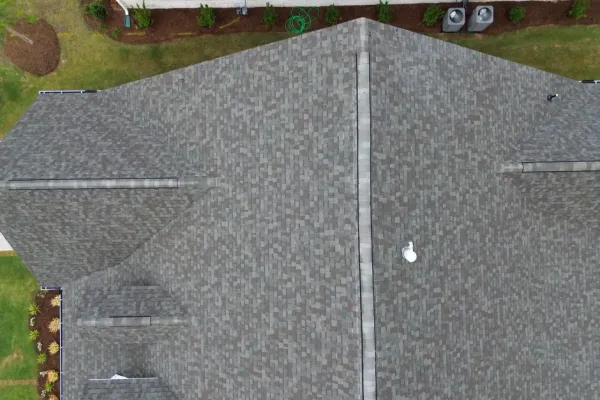
The west side of Marietta meets the weather first
Afternoon storm cells moving across Cobb County arrive at the neighborhoods near Kennesaw Mountain National Battlefield Park with their energy intact, and Whitlock Heights takes that first pass. Straight-line wind works on ridge caps and rake edges, hail lands hardest on the west-facing slopes, and the tall pines and oaks over the older lots turn gusts into dropped limbs. After any serious weather we walk the whole roof, not just the slope with the obvious wound, and we photograph everything for the insurance file. Wind damage hides at the fastener line, and hail bruising shows up best to a hand run across the shingle, so drive-by assessments miss both.
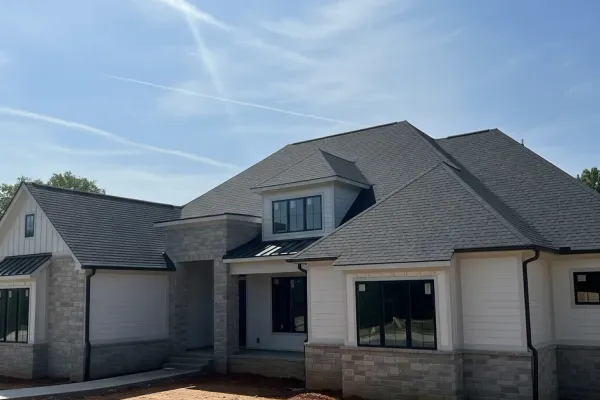
Simple rooflines reward honest, right-sized repairs
A long gable or a shallow hip over a brick ranch is about the most maintainable roof geometry ever built, and that changes the economics in Whitlock Heights. A slipped course of shingles, a failed valley, a rusted-through section of drip edge: on this housing stock these are contained, affordable repairs, and treating them as replacement triggers is how homeowners get overcharged. We size the work to the problem. Matching shingle color on a faded roof takes care, so we bring samples up and check them in daylight against the field before committing. When a repair will hold for years, that is exactly what the estimate says.
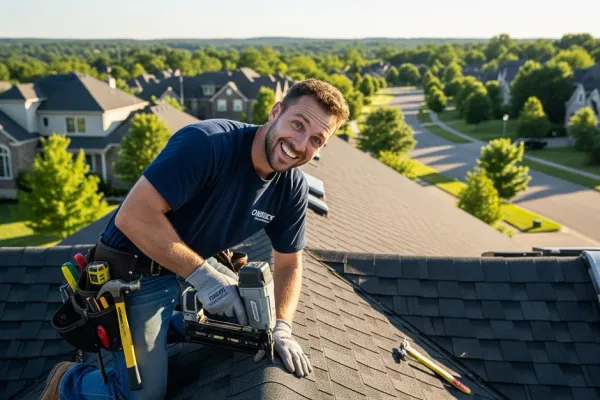
Brick walls meet the roof at a line that matters
Mid-century masonry gives Whitlock Heights its character, and it gives its roofs a particular vulnerability: every place a roof plane dies into brick depends on step flashing and counterflashing cut into the mortar joints. Where a chimney rises through the ridge, the uphill side needs a cricket to split water around the masonry instead of letting it pond. Original installs handled these details to the standards of their day, and many later reroofs simply caulked over them. Caulk is not flashing. We recut the joints, set new step and counterflashing in sequence with the shingles, and let the masonry shed water the way it was always meant to.
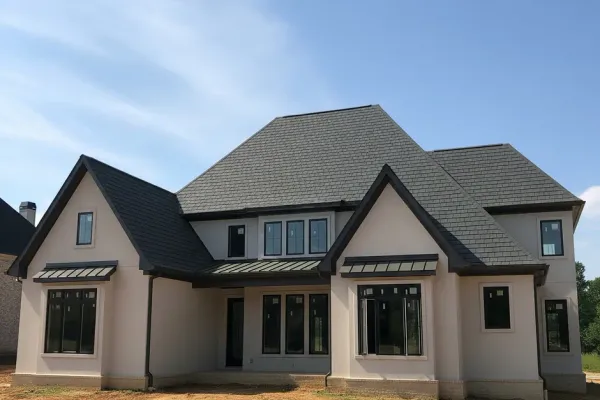
Cottage additions and porch tie-ins leak at the seams
Sixty years gives a house time to grow. Across Whitlock Heights, carports became garages, porches became sunrooms, and one-story cottages picked up rear additions, each one creating a roof transition the original builder never planned. Where a low-slope addition ties into a steeper main roof, shingles alone cannot make the joint reliable, and these junctions produce a steady share of the leak calls we take west of the Square. The durable fix pairs the right material with each pitch, membrane or standing seam metal on the shallow section, shingles above, with the transition flashed and counterflashed rather than bridged with sealant. Gutters sized to the combined runoff finish the job.
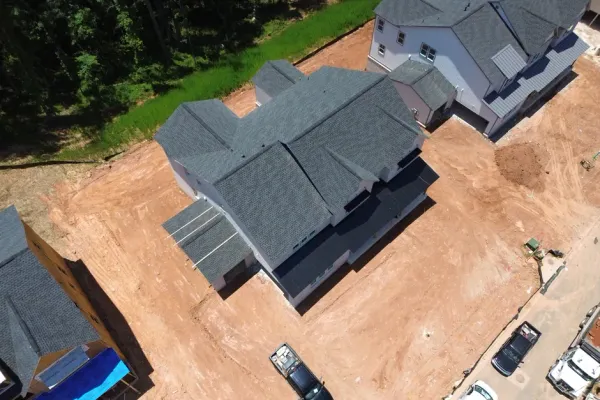
Whitlock Heights belongs to the quieter side of Marietta. West of the Square along the Whitlock Avenue corridor, the streets settle into mid-century brick ranches and cottages under mature trees, with Kennesaw Mountain National Battlefield Park rising beyond the rooflines and the Marietta Country Club direction marking the far edge of the neighborhood’s daily orbit. Houses here were built in an era of straightforward construction: solid brick, low horizontal lines, long gable and hip roofs without much ornament. Sixty-plus years on, that simplicity is an asset. These are honest houses, and they respond well to honest roofing.
These ranches were built solid, and their roofs can be too
Mid-century framing in Whitlock Heights has held its shape remarkably well, which means most roof trouble here is skin-deep: worn shingles, tired flashing, decking soft only where a leak ran unattended. The failures are also older than the ones we chase elsewhere in Marietta. Original galvanized flashing has simply reached the end of its metal, plank decking from the era moves differently under modern shingles than plywood does, and additions from later decades introduced transitions the first builder never drew. None of this is exotic work. It is careful work, roof by roof, and a crew that knows what sixty-year-old construction looks like from the attic side gets it right the first time.
The right roof for a brick ranch, sixty years on
Materials have improved in every direction since these houses were first shingled, and a Whitlock Heights reroof should collect all of it. We install GAF and CertainTeed systems, and the architectural lines carry wind ratings and algae resistance the mid-century products never approached, in low-profile colors that suit a horizontal brick house. Underneath goes the assembly that era skipped: drip edge at every eave and rake, synthetic underlayment, ice and water shield in the valleys, balanced ventilation through ridge and soffit so summer heat stops baking the shingles from below. On the shallow-pitch porch and addition sections common across Whitlock Heights, standing seam metal or membrane does what shingles at that slope cannot. If you want a starting number first, an instant roof estimate takes about a minute.
Storm work is half the job on the west side
Weather drives the phone in this part of Marietta. After hail moves down the corridor we handle hail damage roof repair with full photo documentation for the claim, and when wind or a falling limb opens a roof in the middle of the night, emergency roof repair crews tarp first and sort the rest in daylight. The slower calls matter just as much: a ceiling stain that needs real roof leak repair rather than another bead of caulk, flashing recut at a chimney, a valley relined before the next storm finds it. Whitlock Heights roofs rarely need drama. They need someone who shows up, finds the actual problem, and fixes that.
West of the Square, and wherever Marietta needs us
Our crews cover Whitlock Heights as part of a route that runs the width of the county, from the historic blocks around the courthouse square out to the newer traditionals of East Cobb, with Whitlock Avenue and Powder Springs Street carrying us to this neighborhood in minutes. If your ranch or cottage is due for a look, before storm season or after it, schedule a free inspection and we will walk every slope, photograph what we find, and give you the same straight answer we would want about our own roof.
Does sitting near Kennesaw Mountain change what my roof faces?
Practically speaking, yes. Whitlock Heights and the neighborhoods along Whitlock Avenue meet Cobb County's westerly storms early, with open ground toward the battlefield park and mature trees over many lots, so wind gets a clean run and limbs are a constant factor. That does not call for an exotic roof. It calls for disciplined details: sound fastening at ridges and rakes, intact flashing, clear gutters, and a walk-over inspection after any hail event. Homes maintained that way ride out west-side weather year after year.
My ranch still has older three-tab shingles. What should replace them?
An architectural shingle from the GAF or CertainTeed lines we install is the natural step up. The heavier laminated construction carries better wind ratings than the three-tab era ever offered, and the profile suits a long ranch gable. Just as important on a Whitlock Heights home is what goes underneath: new drip edge, since many mid-century roofs were built without it, synthetic underlayment, ice and water shield in any valley, and fresh flashing at the brick. The shingle is the visible upgrade. The assembly is the one that keeps the house dry.
Where do mid-century homes around Whitlock Heights usually leak first?
At the metal, almost always. Chimney flashing that has outlived several shingle roofs, split rubber boots at the plumbing stacks, rusted valley metal, and the tie-in seams where porches and additions join the main roof. The shingle field itself is usually the last thing to fail on these houses. That is why our inspections work the flashing lines and the attic side first, tracing any stain back to its true entry point before quoting anything. Fix the metal and a Whitlock Heights ranch roof tends to go quiet for years.
What happens when I call about storm damage at night?
You get a person, and then you get a tarp. Emergency crews run around the clock, and Whitlock Heights is minutes from our routes along Whitlock Avenue and Powder Springs Street, so response is fast even in bad weather. The first visit stabilizes the roof and stops active water intrusion. Once the storm clears, we return in daylight for a full documented inspection, photograph every slope for your insurance carrier, and walk you through repair options with a written itemized estimate. Call (470) 777-7344 whenever it happens.
Get ahead of the next storm off the mountain
A Whitlock Heights roof does its hardest work a few afternoons each summer. Find out now whether yours is ready: free inspection, photos of every finding, and honest numbers in writing, whether the answer is a small flashing repair or a full replacement planned on your schedule.
Not sure what a new roof runs? Estimate your roof cost in Marietta, measured from satellite imagery, or run a storm & insurance damage check.