Roofers for the Historic Homes Around Marietta Square
The blocks around Marietta Square hold some of the oldest housing stock in Cobb County, and the roofs prove it. Victorian gables from the 1800s stand a street over from craftsman bungalows finished in the 1920s, and no two of them have aged alike. We treat that variety as the point of the job, not a complication. Best Marietta Roofer does its own work, from a single run of step flashing to a full tear-off. Every Marietta Square project starts the same way: a free inspection, photos of what we find, and a written, itemized estimate.

Roof care with respect for what came before
Marietta Square is not a subdivision, and we do not treat it like one. The historic districts that spread along Church Street and Kennesaw Avenue were built house by house across more than a century, which means the roof on one lot can have almost nothing in common with the roof next door. Steep Victorian gables, low craftsman porches, brick chimneys rising through the ridgeline. Each calls for its own plan.
That is why inspections around Marietta Square move slower than most. We walk every slope, check the decking from the attic where access allows, and photograph the findings so you can see them yourself. The estimate arrives itemized in plain language, the work carries a written workmanship guarantee, and nobody pushes you toward a replacement your roof does not need.
Period looks, modern weather protection
Architectural shingle lines and standing seam metal accents can hold the character of a Victorian or craftsman roofline while adding the underlayment, drip edge, and flashing details these homes never had. The street keeps its look. The house finally sheds water the way it should.
Free inspections with photo documentation
Before anyone talks money, we walk the roof, the attic, and the gutters, then hand you photos of exactly what we found. Around Marietta Square that record matters twice: once for your decision, and again for your insurer if a storm claim ever follows.
One crew from ridge to downspout
Old houses do not separate their problems neatly. Shingles, chimney flashing, fascia, and gutters tend to fail together, so one crew handles all of it in a single scope instead of leaving you to coordinate three trades on one small historic lot.
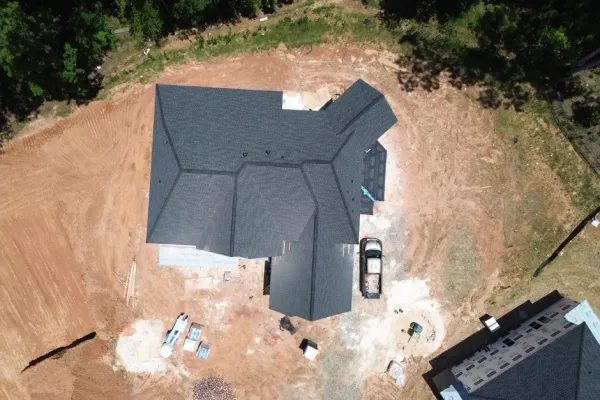
Steep Victorian pitches demand real footing and patience
Tall gabled roofs on Marietta Square's Victorian-era homes were framed steep on purpose, and that geometry still governs the work today. Steep pitch means harnessed crews, roof jacks, and staging, and it punishes shortcuts. Long open valleys channel serious water in a summer downpour, so we line them with ice and water shield before any shingle goes down. Ridgelines get true cap shingles, never bent three-tabs. Wind uplift matters more at this height, which is why nailing patterns and starter courses get checked on every slope. A steep roof built carefully outlasts two built fast, and these houses have earned the careful version.
Craftsman bungalows age in their eaves and porch roofs
Craftsman houses on the 1920s blocks near Marietta Square show their age at the edges first. Wide overhanging eaves trap moisture against soffit and fascia boards, porch roofs run at low slopes that asphalt shingles tolerate poorly, and exposed rafter tails rot quietly wherever a gutter has leaked for years. We look there before anywhere else. Low-slope porch sections often do better under standing seam metal or a properly detailed membrane than under the shingles someone stretched across them decades ago. Where trim boards have softened, we replace them in kind so the repair disappears into the house instead of announcing itself.
Storm season does not spare the historic districts
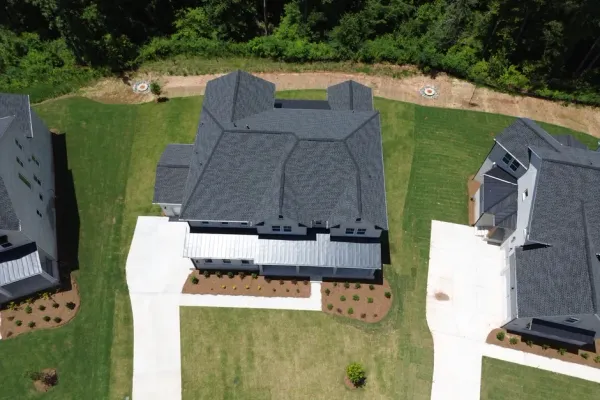
Summer around Marietta Square brings the same afternoon thunderstorms and occasional hail the rest of Cobb County sees, and older roofs feel them harder. Brittle shingles crack instead of flexing. Aging chimneys shed mortar under wind-driven rain. Mature oaks along the historic streets drop limbs that can punch through decking. When a storm rolls across Glover Park, we respond around the clock: tarping first to stop the water, then a documented inspection of every slope once the sky clears. The crew reaches Marietta Square quickly off the GA-120 Loop, and the photos we take are the ones your insurance carrier will want to see.
Under old shingles, the decking tells the truth
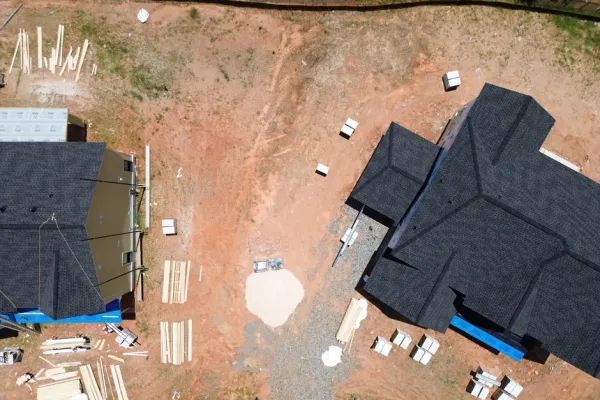
Tear-offs around Marietta Square regularly uncover plank decking sawn a century ago, and its condition decides more about the project than the shingles ever will. Sound old boards are worth keeping. Sections softened by long-term leaks need replacement before any underlayment goes down, because new shingles over bad decking is money wasted. We price decking honestly. The written estimate carries a per-board allowance up front, you approve replacements from photos as they are found, and nothing gets buried in the final invoice. That is how roof work on a historic street should run, and it is the only way we run it.
Chimneys, gutters, and the trim that holds a streetscape together
Rooflines around Marietta Square carry details most subdivisions never had: brick chimneys stacked two stories and taller, deep cornices, gutter runs shaped to houses that predate the gutter aisle at any supply store. Water finds every one of them. Chimney flashing that gave out years ago shows up today as stained plaster two floors down. Undersized or sagging gutters dump runoff against fascia and window heads. We fold these assemblies into the roof scope, with step and counterflashing cut into the masonry joints rather than smeared over with sealant, and gutters hung to move water off the house the way its builders intended.
Marietta Square anchors the oldest part of the city, with Glover Park at its center and the historic courthouse square around it. Fan out along Church Street and Kennesaw Avenue and the housing stock runs from 1800s Victorians to 1920s craftsman bungalows, block after block of homes that predate every subdivision in Cobb County. People keep these houses because they are worth keeping. The Strand Theatre still lights its marquee on the Square, the farmers market still sets up every week, and the neighborhood still walks to both. A roof near Marietta Square is not a commodity install. It is the one layer standing between a hundred years of woodwork and a Georgia thunderstorm, and it should be handled by people who see it that way.
These streets were built by hand, and their roofs still show it
Framing crews in the 1890s cut rafters one at a time, and the roofs they left behind still carry that signature: steep pitches, irregular planes, chimneys rising through the ridge instead of hugging an outside wall. Later craftsman builders went the other direction, with low porch slopes and deep sheltering eaves. Both styles have outlived their original materials many times over. What a Marietta Square roof needs now is not reinvention. It needs sound decking, correct flashing at every wall and chimney, underlayment matched to the pitch, and attic ventilation that lets a hot Georgia roof breathe without cutting vents where they do not belong. That is patient work, and it is the kind we do.
Materials that belong on a hundred-year-old street
Nobody wants a roof that argues with its streetscape. We install GAF and CertainTeed systems, and both catalogs carry architectural shingles with enough shadow and profile to sit naturally on a Victorian gable, in colors quiet enough for a craftsman bungalow. Standing seam metal earns its keep on low-slope porch roofs and bay window caps, the very places these houses often wore metal originally. Underneath, the assembly goes fully modern: synthetic underlayment across the field, ice and water shield in the valleys and along the eaves, new drip edge, and step flashing cut into masonry joints. From the sidewalk on Marietta Square the roof reads as if it always belonged. Under the surface it performs like the newest roof in Cobb County, because it is.
The services older roofs ask for sooner or later
Most Marietta Square calls start small. A stain on a plaster ceiling leads to roof repair at a failed valley or a slipped shingle course. A sale, or the simple anniversary of the last roof, prompts a roof inspection with photos and a written condition report. Masonry trouble above the roofline becomes chimney repair once the flashing comes into view. And when the answer truly is a new roof, we say so plainly and price it line by line. Curious before anyone climbs a ladder? The roof cost calculator gives Marietta Square homeowners a rough range in about a minute.
From the courthouse square to the rest of Marietta
Marietta Square sits at the middle of everything we do, and the same crew works outward from it: west along the Whitlock Avenue corridor into Whitlock Heights, east toward the newer traditionals of East Cobb, and across the rest of Cobb County. If your house stands on one of the historic blocks, or one street off them, schedule a free inspection and we will start with photos and a straight answer. The house has stood for a century. The goal is a roof that helps it stand another.
Can a reroof keep the original look of a Marietta Square home?
Usually, yes. Architectural shingle lines from GAF and CertainTeed come in profiles and colors that sit naturally on Victorian and craftsman rooflines, and standing seam metal suits porches and bay window caps, where houses of this era often carried metal in the first place. If your block falls under historic guidelines, we work within them and keep the visible details consistent with the street. The improvements hide underneath: synthetic underlayment, ice and water shield in the valleys, proper drip edge, and flashing the original builders never had.
Do the older houses near Glover Park usually need a full tear-off?
Not always, and we will tell you which case yours is. Some Marietta Square roofs carry two or even three shingle layers from past decades, and those must come off before anything new goes down. Others hold a single aging layer over sound plank decking and can take a straightforward replacement. A fair number just need repairs: a valley relined, flashing recut, a slope of wind-lifted shingles renailed. The free inspection settles it with photos, and the estimate prices only what the roof actually needs.
How fast can you reach Marietta Square after a storm?
Quickly. The neighborhood sits at the center of the city, minutes off the GA-120 Loop with I-75 close by, and the crew runs storm response around the clock. Emergency tarping comes first so water stops moving through the house, then a full documented inspection of every slope once the weather clears. You get photographs and notes your insurance carrier can use, and we can meet the adjuster on site. Call (470) 777-7344 at any hour and we will walk you through the next step.
What drives the cost of roof work on a Victorian or craftsman house?
Pitch, access, and detail. A steep roof takes staging and slows every task. Chimneys, dormers, and long valleys add flashing hours, and plank decking can need board replacement once the old shingles come off a Marietta Square roof. None of that should be a mystery. The estimate itemizes each line so you can see where the money goes, financing options exist when a full replacement arrives ahead of schedule, and a written price from a real inspection beats any guess shouted from the curb.
Give a historic roof the attention it has earned
Whether your Marietta Square house dates to the courthouse square's early days or the craftsman decades after, its roof deserves a straight answer. Book a free inspection, get the photos and the itemized numbers, and decide without pressure. Repairs when repairs will do. Replacement only when it is honest.
Not sure what a new roof runs? Estimate your roof cost in Marietta, measured from satellite imagery, or run a storm & insurance damage check.