Acworth Roofing Contractors, Lake Side of Cobb County
Acworth calls itself the Lake City, and the nickname earns its keep. Water shapes the weekends here, the weather, and, more quietly, the roofs. Best Marietta Roofer is a local roofing company, and we do our own work across Acworth's 30101 and 30102 zip codes all year. Every project opens the same way, whatever its size: a free inspection, photographs of what the crew actually finds up there, and a written estimate you can sit with before deciding a thing.
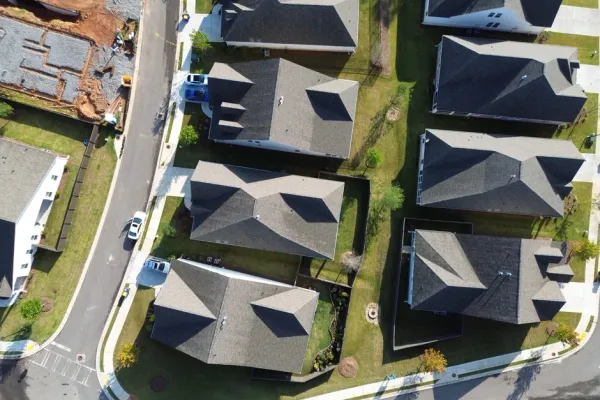
Lake air works on shingles all year long
Between Lake Acworth and Lake Allatoona, this corner of Cobb County holds more moisture in its air than most of metro Atlanta. Shaded slopes stay damp long after sunrise, and damp shingles grow the dark algae streaks that show first on north-facing roof planes. Moss follows wherever limbs hang low and the sun rarely lands. None of that means a roof is failing. It does mean an Acworth roof deserves attention on a schedule: valleys cleared before leaf season ends, flashing checked where a slope stays wet longer than its neighbors, and algae-resistant shingles worth pricing when replacement time finally arrives.
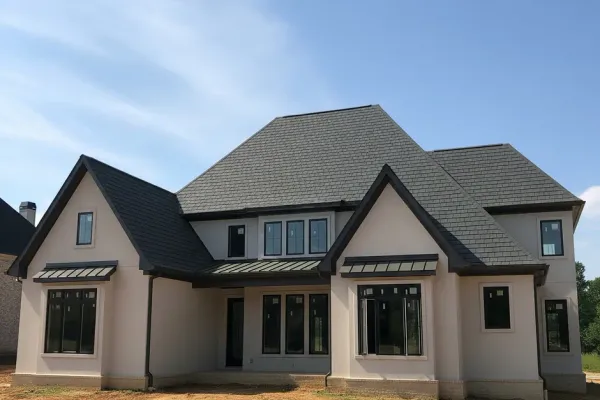
Main Street's older homes ask for a lighter touch
Historic downtown Acworth kept its bones, and the streets around Main Street still hold houses older than any subdivision in the city. Their roofs reward patience. Decking under a downtown roof may carry two generations of shingle layers, framing seldom matches modern lumber dimensions, and steep gables meet porch roofs at angles a production crew would rather avoid. Our crew treats these tear-offs as inspections in their own right, replacing decking board by board where rot has moved in, and shaping drip edge and step flashing to fit the house instead of forcing the house to accept an off-the-shelf detail.
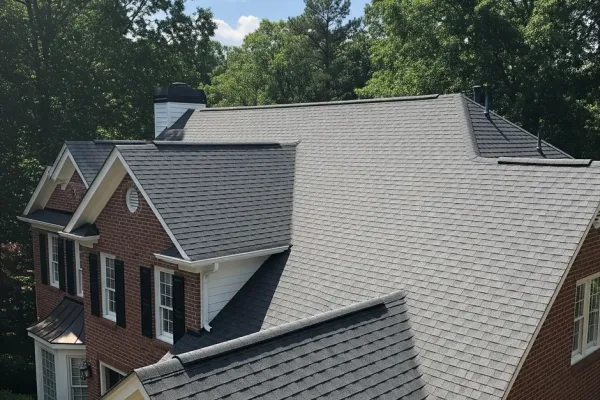
Open water gives storm wind a running start
A thunderstorm that crosses a lake arrives with its wind intact. Gusts that would break up over dense tree cover come off Lake Allatoona with enough push left to test ridge caps, rake edges, and any shingle tab whose sealant bond has aged past its best years. Hail rides along in the spring cells and bruises shingle mats in ways no one can spot from a driveway. After weather crosses Acworth, the crew walks each slope, photographs what it finds, and says plainly whether the answer is a repair, an insurance claim, or nothing at all. Legitimate claims get carrier-ready documentation from the first visit.
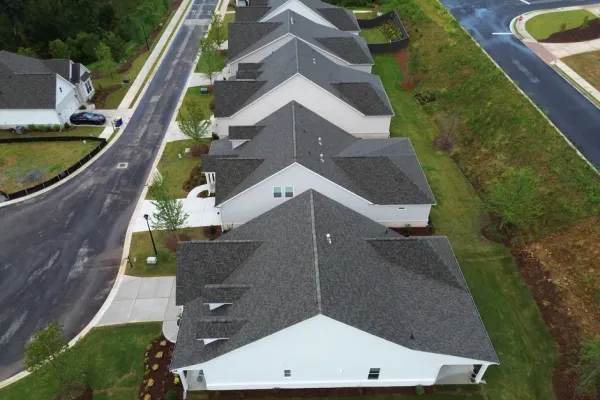
The exit 277 corridor is reaching reroof age
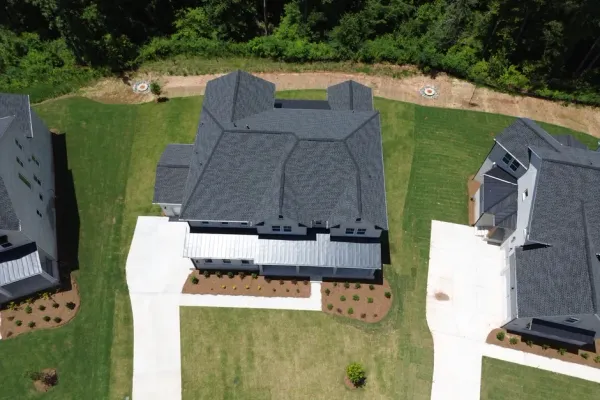
Acworth grew quickly once I-75 made the commute workable, and the neighborhoods spreading out from the exit 277 area went up within a couple of decades of one another. Their roofs age on a shared calendar. Builder-grade three-tab shingles from the early waves are finishing their run, and even the architectural shingles that followed show early granule loss where attic ventilation was treated as an afterthought. When several houses on one street sprout new roofs in a single season, that is the calendar coming due. Getting your own roof's date on record beats letting a storm choose it for you.
When a limb comes through, hours matter
Storm damage in a tree-heavy town is not always subtle. A dropped oak limb can open a hole straight through the decking, and summer downpours do not wait for business hours. Emergency calls get a tarp response first, securing the opening and stopping active water entry, with photographs taken along the way because the insurance file starts at that moment whether you have thought about it yet or not. Once the weather clears, the crew returns for the full assessment and the written scope. The order matters: protect the house, document everything, then decide on repairs calmly instead of at midnight.

The Lake City wears its nickname easily. Lake Acworth sits right inside the city limits, Lake Allatoona spreads out just beyond it, and historic downtown Acworth runs along Main Street a few blocks from the water, with Logan Farm Park’s fields and paved paths tying the middle of town together. Around all of that sits the housing: older homes near the downtown blocks, shaded streets close to the water, and subdivision after subdivision from the decades when Acworth became one of the fastest-growing corners of Cobb County. Every one of those roofs shares the same weather. Lake humidity, Georgia sun, and spring storms do not care which era built the house, though they attack each era a little differently. This page is about those differences and what to do with them.
Two lakes’ worth of weather lands on Acworth roofs
Humidity is the quiet constant. Air moving over the water carries moisture into every Acworth neighborhood, and roofs feel it as slow pressure: shingles that stay damp past mid-morning on shaded slopes, algae blooming into dark streaks on north faces, moss padding the edges where oaks hang low. Trees add their own load. Leaf drop packs valleys and gutters every fall, pine needles mat over downspout openings, and spring pollen cements the whole mixture in place. Water that cannot drain moves sideways instead, over the back of the gutter, behind the drip edge, into fascia and soffit boards that rot quietly for years before anyone notices. Routine gutter cleaning breaks that chain for less than the cost of one fascia repair, and it is the single most useful habit a homeowner near the water can keep.
From Main Street bungalows to exit 277 cul-de-sacs
Acworth’s housing tells its history in order. The oldest roofs sit downtown, on homes that watched the railroad era come and go, and they carry the quirks of their age: true-dimension framing, steep little gables, decking that may hide a second shingle layer from a reroof done generations back. The boom decades wrote the next chapters outward from I-75, and the neighborhoods around the exit 277 area now hold street after street of same-age roofs moving toward replacement together. When your roof’s turn comes, the scope matters more than the sales pitch. A proper roof replacement is written down to its parts: full tear-off, decking inspected and replaced where soft, synthetic underlayment, membrane in the valleys, new drip edge and flashing, and a ridge vent cut to move attic air. If you would rather hold a number before talking to anyone, you can run your numbers through the roof cost calculator and walk into the estimate conversation already knowing the realistic range.
The repair list Acworth actually calls about
Most calls are small, and honest treatment keeps them that way. A stain spreading across a bedroom ceiling usually traces to a failed pipe boot or a slipped shingle course, handled as a same-week roof repair with no talk of replacement attached. Chimney step flashing gives out on the older downtown homes. Sealant bonds let go on wind-tested tabs above the newer two-story streets. Hot attics are the sleeper issue: plenty of boom-era Acworth houses vent through a pair of gable louvers and nothing else, which shortens shingle life from below and keeps upstairs rooms stubborn in August, and a roof ventilation correction often rides along with other work for modest money. After storms the rhythm flips. Tarps go up quickly where wind or a falling limb opened the surface, photographs follow, and the written scope comes last, so the urgent part is stabilized before anyone discusses the long term.
An easy run from Marietta to the lake end of Cobb
Best Marietta Roofer works out of Marietta, and the drive up to Acworth is a standing part of the week’s route, so scheduling stays quick even in storm season. Permits file through Cobb County, and the work is built to pass county inspection the first time rather than argued into passing later. The same crew covers the neighboring stretch of northwest Cobb as well; if you also look after a property closer to the university side of the county, the Kennesaw roofing page covers that ground. From a Main Street bungalow to a cul-de-sac off exit 277, the first step never changes: book a free inspection online or call (470) 777-7344, and get photographs and a straight answer about your Acworth roof.
Do the dark streaks on my Acworth roof mean the shingles are wearing out?
Usually not. Those streaks are almost always algae feeding on the limestone filler inside the shingles, and the humid air around Lake Acworth and Lake Allatoona gives it everything it needs. Algae stains look bad but do little structural harm on their own. The caution is what they signal: a slope that holds moisture, which can also shelter moss, and moss does lift shingle edges over time. A soft chemical wash removes the staining, zinc or copper strips slow its return, and algae-resistant shingles settle the issue for good at replacement time.
My house near downtown Acworth is close to a century old. Can it be reroofed without losing its character?
Yes, and it should be. Older homes around Main Street were framed with true dimensional lumber and often carry steeper pitches and trim details that modern subdivisions never had. A careful reroof keeps all of that. The crew strips to the decking, replaces only the boards that need it, and matches ridge lines, valleys, and flashing details to the original profile. Material choices help too: architectural shingles hold shadow lines that suit older houses, and painted flashing can sit quietly against historic trim. The house keeps its face. It just stops leaking.
What should I do in the first days after hail hits Acworth?
Start from the ground. Note the date, photograph any dents in gutters, downspouts, or grills, and check the yard for shingle pieces or heavy granule piles below the downspouts. Stay off the roof itself. Then get a professional inspection before filing anything, because carriers treat a documented claim very differently from a guess. Hail bruising is often invisible from the ground and obvious up close. If the crew finds real damage, you get slope-by-slope photographs and an itemized scope to hand your adjuster. If it finds none, you skip a claim that would have gone nowhere.
Who actually climbs onto my roof when I call about an Acworth job?
Best Marietta Roofer is a local roofing company serving Acworth and Cobb County, and we do our own work. The same crew handles the inspection, writes the itemized estimate, and builds the job, so nothing gets lost in a handoff. We install GAF and CertainTeed systems. Estimates arrive in writing before any work begins, and finished projects carry a written workmanship guarantee alongside the manufacturer's material warranty.
How often should a roof this close to Lake Allatoona get looked at?
Twice a year is the honest rhythm for lakeside streets, once after leaf drop and once after storm season, plus a look after any hailstorm you actually heard on the windows. The moisture load near the water accelerates the small stuff: algae on shaded planes, debris packing into valleys, fasteners backing out as decking swells and shrinks. Fifteen minutes on a ladder twice a year catches most of it while the fix is still a service call. Roofs that go five years unseen are the ones that turn a loose flashing into a rotted soffit.
Get honest eyes on your Acworth roof
One free visit gets you photographs, findings, and a written repair-or-replace answer from a crew that runs Acworth routes every week. No pressure follows the report, just a clear next step you control. Call (470) 777-7344 or book online in about a minute.
Not sure what a new roof runs? Estimate your roof cost in Marietta, measured from satellite imagery, or run a storm & insurance damage check.