Dallas Roofing Contractors for the Paulding County Seat
Dallas holds down the seat of Paulding County, and the historic courthouse square still sets the town's tone even as new rooftops multiply in every direction around it. Growth pushed west of Cobb years ago and has not slowed since. Best Marietta Roofer is a local roofing company covering the 30132 and 30157 zip codes, and we do our own work. First visits are free and carry no strings: an inspection, photographs of the findings, and an itemized written estimate you can consider at your own pace.
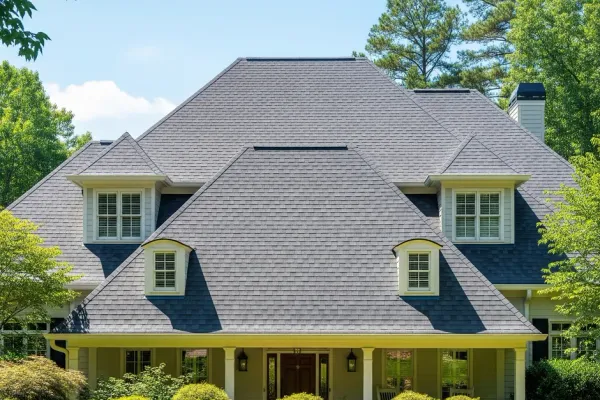
Around the courthouse square, roofs show their years honestly
The blocks near the square hold Dallas's older housing, and age shows up there in ways subdivision streets never see: ridge lines that dip with settled framing, layered shingles from reroofs done decades apart, chimneys whose mortar and step flashing have been trading water damage for years. These roofs are worth doing right. Tear-offs go down to the decking, soft boards come out instead of getting covered over, and flashing gets rebuilt rather than caulked into one more season. A careful crew leaves an older Dallas home with a roof that fits its lines and outlasts the shortcuts.
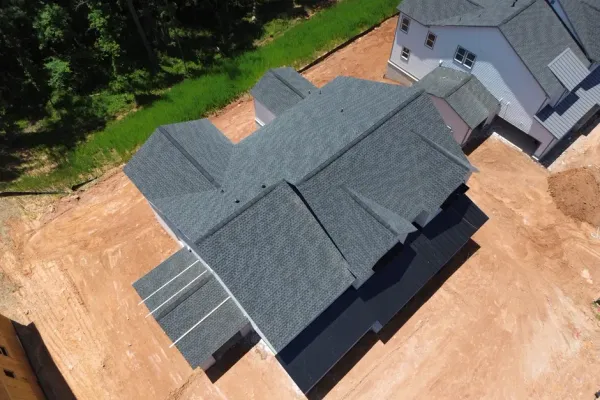
Paulding's building boom is coming due, one roof at a time
Dallas grew faster than almost anywhere in the metro through the 2000s and 2010s, as subdivisions pushed west of Cobb in search of land and price. The first waves of those roofs are now crossing into their third decade, and builder-grade shingles from that era rarely stretch much past it in Georgia heat. The pattern is easy to read on any street: granule wash at the downspouts, curled tabs on the southern slopes, a neighbor's reroof, then two more. Homeowners who get an honest read on their roof's remaining years get to plan the expense instead of absorbing it.

Hail does not stop at the county line
Storm cells crossing the west metro reach Paulding County early in their run, and Dallas takes its share of hail and straight-line wind every spring. Two-story homes on open lots give gusts a clean shot at rake edges and ridge caps, and hail bruising hides in the shingle mat where no one can see it from the ground. After weather crosses Dallas, the crew walks every slope with a camera, chalks what it finds, and separates storm damage from plain aging the same way an adjuster will. Legitimate claims move forward with full documentation. Roofs without real damage get told the truth, which costs nothing.
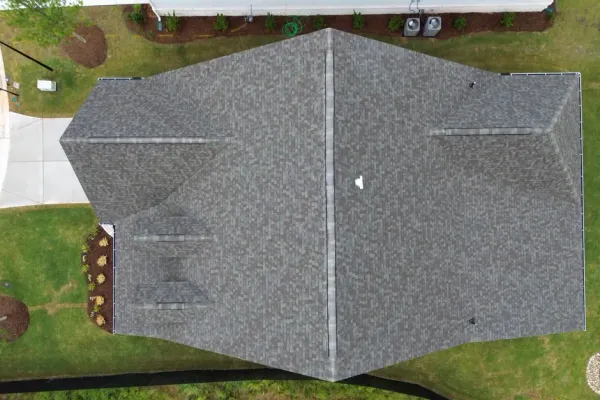
Hot attics age Dallas roofs from underneath
A Paulding attic in July can run forty or fifty degrees past the outdoor number when ventilation is undersized, and plenty of boom-era homes shipped with a pair of gable louvers doing work a full system should. That trapped heat bakes shingles from the underside, curls courses on sun-facing slopes ahead of schedule, and pushes cooling bills the wrong direction. The correction pairs naturally with roof work: a continuous ridge vent cut at the peak, soffit intake cleared and baffled so air actually moves, bath fans ducted outdoors instead of into the insulation. Balanced airflow is the cheapest life extension a Dallas roof can buy.

New construction does not guarantee a sound roof
Plenty of Dallas roofs are young, and young is not the same as right. Production building moves fast, and the shortcuts that slip through, nails driven high or overdriven, skimpy starter courses, valleys left unlined, step flashing reused where it should have been replaced, tend to surface between years five and ten. A house still inside its first decade can leak at a chimney or shed tabs in a routine storm for exactly these reasons. An independent inspection reads the installation itself, not just its age, and gives newer Dallas homeowners the punch list while the fixes are still small.
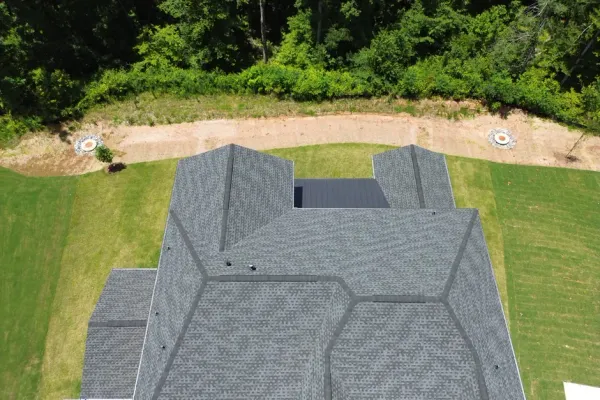
County seats keep their history where you can see it, and Dallas keeps its own around the historic courthouse square. The square anchored a small Paulding County farm town for generations. Then metro Atlanta arrived, and subdivisions began reaching out along GA-6 and US-278 until Dallas became one of the fastest-growing addresses west of Cobb. Roofs around town tell both halves of that story. Older homes near the square are counting decades, newer streets are aging in lockstep, and the weather refuses to distinguish between them. This page walks through what Paulding County asks of a roof and how Dallas homeowners stay ahead of it.
Courthouse square bones, commuter town growth
Housing in Dallas splits cleanly into two generations. Near the courthouse square sit the older homes, built when Dallas served farms instead of commuters, and their roofs carry the marks of long service: settled framing, chimneys with tired step flashing, sometimes a second shingle layer from a decades-old reroof that should never have been left in place. Everything else came fast. The subdivision waves of the 2000s and 2010s pushed west out of Cobb County in search of land, and they shingled entire streets in single seasons, which means those same streets now approach replacement age together. The two generations fail differently, and they get treated differently. Older roofs earn full tear-offs with decking replaced board by board. Boom-era roofs mostly need honest triage: which slopes are tired, which flashing was underdone the first time, and how many serviceable years remain before replacement is worth putting on the calendar.
What a Paulding County roof is up against
Georgia gives Dallas roofs a full rotation of enemies. Summer heat cooks shingles for months and works fastest above attics with weak ventilation. Spring and early summer push severe thunderstorms across the west metro, and Paulding County often catches those cells early in their run, straight-line wind testing ridge caps and rake edges while hail bruises the shingle mat where nobody can see it. A handful of freeze-thaw nights each winter pumps moisture into every crack and gap, backing out nails and opening seams for the next storm to exploit. After a hail event, guessing is expensive in both directions, filing a claim with no damage or absorbing damage with no claim. A slope-by-slope hail damage roof repair assessment settles it with photographs, chalk marks, and a written scope that speaks the adjuster’s language, and the claim only moves forward if the evidence is actually there.
From patched valley to full tear-off in Dallas
The working list in Dallas runs the full range. A typical week includes chasing a ceiling stain back to a cracked pipe boot, rebuilding chimney flashing on a house near the square, and clearing a valley that has been quietly pushing water under the shingle courses since last fall, the kind of same-week roof repair that keeps small problems small. Gutters matter more than people expect on Paulding’s rolling lots, where a gutter installation sized and pitched correctly decides whether runoff leaves politely or carves channels beside the foundation. And when a roof is genuinely done, the conversation changes to a written roof replacement scope: tear-off, decking, underlayment, valley membrane, drip edge, flashing, shingles, ridge vent, itemized so two bids can be compared honestly. Homeowners who want a number first can get an instant roof estimate online before anyone sets foot on a ladder.
The straight shot from Marietta out to Dallas
US-278 runs from Marietta’s side of the county straight into Paulding, and Dallas sits at the end of a route our crew already drives every week. The Silver Comet Trail points the same direction, working its way west through Paulding County, and the neighborhoods that grew up around that corridor make up a steady share of the schedule. Permits file with Paulding County, inspections pass the first time, and storm response does not slow down at the county line. Closer to Cobb, the Powder Springs roofing page covers the trail’s east side. For anything in Dallas itself, from the square to the newest cul-de-sac, book a free inspection online or call (470) 777-7344 and get a straight, photographed answer.
Half my Dallas subdivision has reroofed in the last few years. Should I assume mine is next?
Treat it as a strong hint, not a verdict. Streets that were shingled together age together, so a wave of reroofs usually means the whole block's materials are reaching the same point. But exposure varies house to house. Shade, slope direction, attic ventilation, and how the original crew nailed the shingles can swing a roof's useful life by years in either direction. An inspection settles your specific case with photographs and a straight answer, and if the verdict is that you have time left, you get that in writing too and can stop wondering every time it storms.
How can I tell hail damage from ordinary wear on my Dallas roof?
From the ground, you mostly cannot, which is why this question decides so many insurance claims. Hail leaves bruises: soft, dark hits where granules got crushed into the mat, often in no pattern a homeowner would notice. Wear looks different up close, with granule thinning along edges, uniform fading, and cracking that follows age rather than impact. Dents in gutters, vents, and flashing are the supporting evidence adjusters look for. A slope-by-slope inspection with photographs sorts one from the other honestly, so you file when you should and skip the claim when the roof is simply old.
Do you pull Paulding County permits, or is that my problem?
The crew handles it. Reroofs and structural repairs in Dallas run through Paulding County's permitting process, and we file the paperwork, schedule any required inspections, and build to the code the inspectors will check against. That matters beyond convenience, because an unpermitted roof can surface at the worst moment, usually while selling the house or arguing a claim. You get copies for your records when the job closes out, along with the photographs and the written workmanship guarantee. The only thing left on your list is picking the shingle color.
Is Dallas too far out for a crew based near Marietta?
No. The run out US-278 or GA-6 is a normal part of the week, and Dallas jobs get scheduled alongside the rest of the west metro route, not squeezed in as favors. Storm response works the same way, because cells that cross Paulding County are usually tracked on their way toward Cobb and the crew already knows what fell where. Distance shows up nowhere in the estimate. Expect the same process as anywhere else in the service area: a booked window, an inspection with photographs, and a written, itemized number before anyone talks about starting work.
Which company actually does the roofing when I book a Dallas job here?
Best Marietta Roofer is a local roofing company serving Dallas and the west metro, and we do our own work. Nothing about it is hidden, and nothing changes hands mid-job; the crew that inspects your roof is the crew that builds it. We install GAF and CertainTeed systems. Estimates are written and itemized before work begins, and the finished roof carries our written workmanship guarantee along with the manufacturer's warranty on the shingle system itself.
Your Dallas roof, inspected and answered in writing
A free visit ends with photographs, findings, and an itemized repair-or-replace answer from a crew that works Paulding County every week. Take the report and decide on your own schedule. Call (470) 777-7344 or book online in about a minute.
Not sure what a new roof runs? Estimate your roof cost in Marietta, measured from satellite imagery, or run a storm & insurance damage check.